
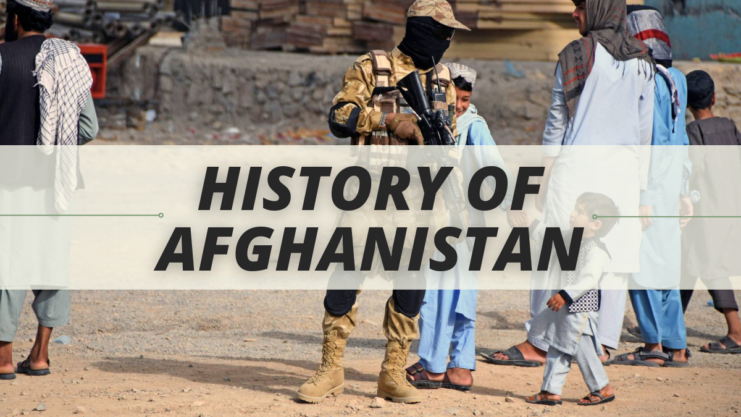
Afghanistan’s history, internal political development, foreign relations, and very existence as an independent state have largely been determined by its geographic location at the crossroads of Central, West, and South Asia.
Over the centuries, waves of migrating peoples passed through the region described by historian Arnold Toynbee as a “roundabout of the ancient world”–leaving behind a mosaic of ethnic and linguistic groups. The outline of the Afghanistan’s History In modern times, as well as in antiquity, will focus on vast armies of the world passing through Afghanistan, temporarily establishing local control.
50,000 BC – 20,000 BC Stone Age
- Archaeologists have identified evidence of stone age technology in Aq Kupruk (balkh), and Hazar Sum.
- Plant remains at the foothill of the Hindu Kush mountains indicate, that North Afghanistan was one of the earliest places to domestic plants and animals.
3000 BC – 2000 BC Bronze Age
- It has been indicated that Bronze have been invented in ancient Afghanistan around this time.
- Urbanization and trade grow, making it an important point between Mesopotamian and other civilizations to emerge as the present day’s “Crossroads of Asia”.
- The first true urban centers rise in two main sites in Afghanistan–Mundigak, and Deh Morasi Ghundai.
- Mundigak (near modern-day Kandahar)–had an economic base of wheat, barley, sheep and goats. Also, evidence indicates that Mudigak could have been the provincial capital of the Indus valley civilization.
- Ancient Afghanistan–crossroads between Mesopotamia, and other Civilizations.
2000 BC – 1500 BC Aryan Tribes in Aryana Emperor Yama (Ancient Afghanistan)
- The City of Kabul is thought to have been established during this time.
- Rig Veda may have been created in Afghanistan around this time.
- Evidence of early nomadic iron age in Aq Kapruk IV.
Ancient period
323 BC After Alexander’s death, the region at first was part of the Seleucid empire. In the north, Bactria became independent, and the south was acquired by the Maurya dynasty.
- Bactria expanded southward but fell (mid-2d cent. B.C.) to the Parthians and rebellious tribes (notably the Saka).
- Buddhismwas introduced from the east by the Yuechi, who founded the Kushan dynasty (early 2d cent. B.C.). Their capital was Peshawar.
- The city, once called Purushapura, was the capital of the ancient Greco-Buddhist center of Gandhara.
- The Kushans declined (3d cent. A.D.) and were supplanted by the Sassanids, the Ephthalites, and the Turkish Tu-Kuie.
Classical Period
256 BC – 130 BC Graeco-Bactrian state established in northern Afghanistan Arsacids Empire and Parthian Empire
- Arsaces, 238BC – 217BC (or 211BC?)
- Artabanus(Ardawan) or Arsaces II, 211BC – 191BC
- Priapatius I, 191BC – 176BC
- Phraates I, 176BC – 171BC
Phil-Hellenistic Period
- Mithradates I, 171BC – 138BC
- Phraates II, 138BC – 128BC
- Artabanus I, 128BC – 123BC
- Mithradates II(the Great), 123BC – 87BC
- Gotarzes, 90BC – 80BC
- Orodes I, 80BC – 77BC
- Sanatruces, 77BC – 70BC
- Phraates III, 70BC – 57BC
- Mithradtes III, 57BC – 55BC
- Orodes II, 57BC – 37BC
- Phraates IV, 37BC – 2BC
- Phraates V, 2BC – AD 4
- Orodes III, AD 4 – AD 7
- Vonones, AD 7 – AD 11
120 Kushan Empire, under King Kanishka
- Graeco-Buddhist Gandharan culture reach its height.
- Under the Kushan King, Kanishka, Buddha was first given a human face and the world’s largest Buddhas (175 feet and 120 feet tall) were carved into the cliff at Bamiyan. But many gods and goddesses from Greek, Persian, Central Asian and Hindu cultures were also worshipped.
225 – 650 Sassanian Empire
- Ardashir I, 224 – 241
- Shapur I, 241 – 272
- Hormizd I, 272 – 273
- Bahram I, 273 – 276
- Bahram II, 276 – 293
- Bahram III, 293
- Narses, 293 – 302
- Hormizd II, 302 – 309
- Shapur II, 309 – 379
- Ardashir II, 379 – 383
- Shapur III, 383 – 388
- Bahram IV, 388 – 399
- Yazdegerd I, 399 – 420
- Bahram V Gur, 420 – 438
- Yazdegerd II, 438 – 457
- Hormizd III, 457 – 459
- Piruz, 457 – 484
- Balash, 484 – 488
- Kavadh (Qobad) I, 488 – 496
- Tamasb, 496 – 499
- Kavadh I, 499 – 531
- Khosrow I (Anushirvan), 531 – 579
- Hormizd IV, 579 – 590
- Khosrow IIParviz, 590
- Bahram VI, 590 – 591
- Khosrow II Parviz, 591 – 628
- Bestam (in Media), 591 – 596
- Kavadh (Qobad) II Shiruye (Siroes), 628 – 630
- Ardashir III, 628 – 630
- Shahrbaraz, 630
- Purandokht, 629 – 631
- Azarmedukht, 631 – 632
- Hormizd V, 631 – 632
- Khosrow III, 632 – 633
- Yazdegird III, 632 – 651
Middle Ages
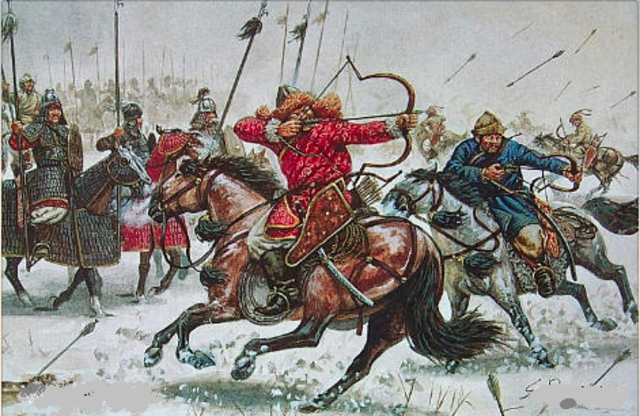
661 – 750 Arabs – Umayyad Caliphate
- Mu’awiya I, 661 – 680
- Yazid I, 680 – 683
- Mu’awiya II, 683 – 684
- Marwan I, 684 – 685
- Abd-al-Malik, 685 – 705
- Al-Walid I, 705 – 715
- Suleyman, 715 – 717
- Umar II, 717 – 720
- Yazid II, 720 – 724
- Hisham, 724 – 743
- Al-Walid II, 743 – 744
- Yazid III, 744
- Ibrahim, 744
- Marwan II, 744 – 750
750 – 821 Arabs – Abbasid Caliphate
- Abu al-Abbas al-Saffah, 750 – 754
- Al-Mansur, 754 – 775
- Al-Mahdi, 775 – 785
- Al-Hadi, 785 – 786
- Harun al-Rashid, 786 – 809
- Al-Amin, 809 – 813
- Al-Mamun, 813 – 833
1140 – 1215 Ghorid leaders from central Afghanistan capture and burn Ghazni, then move on to conquer India
- Ghurid Empire Shansabani Dynasty (Afghanistan)
- Izz Al-Din Husayn I, 1117 – 1146
- Sayf al_Din Suri, 1146 – 1149
- Baha al-Din Sam I, 1149
- Ala al-Din Husayn II, 1149 – 1161
- Say al-Din Muhammad I, 1161 – 1163
- Ghiyath al_Din Muhammad II, 1163 – 1203
- Mu’izz al-Din Muhammad III, 1203 – 1206
- Ghiyath al-Din Mahmud, 1206 – 1210
- Baha al-Din Sam II, 1210
- Ala al-Din Atsiz, 1210 – 1214
- Ala al-Din Muhammad IV, 1215 – 1215
1219 – 1221 Mongol Invasion of Afghanistan by Genghis Khan Empire
- Khans (Mongol)
- Hulagu Khan, 1256 – 1265
- Abagha, 1265 – 1282
- Teguder, 1282 – 1284
- Arghun, 1284 – 1291
- Gaykhatu, 1291 – 1295
- Baydu, 1295
- Mahmud Ghazan, 1295 – 1304
- Uljaytu, 1304 – 1316
- Abu Said, 1317 – 1335
- Arpa, 1335 – 1336
- Musa, 1336 – 1337
- Muhammad, 1336 – 1338
- Sati Beg, 1338 – 1339
- Jahan Temur, 1339 – 1340
- Sulayman, 1339 – 1343
1273 Marco Polo
Marco Polo crosses Afghanistan on his voyage from Italy to China to discover the “Silk Route“. Revolts and battles between smaller kingdoms mark the next two centuries.
1370 – 1404 Timurids and Turkmen Empire
- Timur, 1393 – 1405
- Miranshah (Western Persia), 1405 – 1408
- Khalil (Western Persia 1409 – 1411), 1405 – 1409
- Shah Rokh Shah, 1409 – 1447
- Ulugh Beg, 1447 – 1449
- Soltan Abu Said, 1451 – 1469
1414 – 1421 The Sayyids
- Khizr Khan (1414-1421)
Modern era
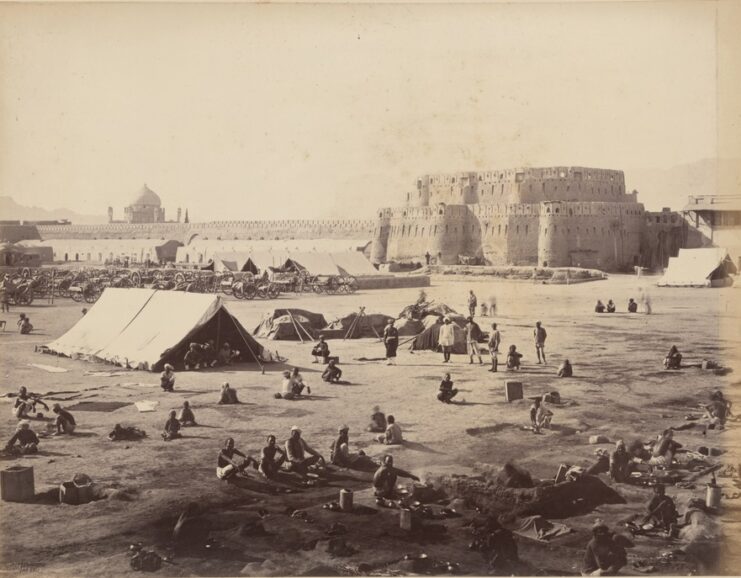
Mughals, Uzbeks, and Safavids
1451 Lodi dynasty An Afghan by named Buhlul Khan invades Delhi and seizes the throne.
- 1451-1489: Buhlul Khan Lodi
- 1489-1517: Sikandar Lodi
- 1517-1526: Ibrahim
1504-1519 Moghul dynasty Babur shah, takes control of Kabul, Babar begins to take control of Afghanistan. Babur, a descendant of Timur , used Kabul as the base for his conquest of India and the establishment of the Mughal empire in the 16th cent.
1520-1579 Bayazid Roshan (Afghan intellectual) revolts against the power of the Moghul government. Roshan was killed in a battle with the Moghuls in 1579–but his struggle for independence continued.
1613-1689 Khushhal Khan Khattak (Afghan warrior-poet) initiates a national uprising against the foreign Moghul government.
1708 Mir Wais Neka (forerunner of Afghan independence) makes Kandahar independent of Safavid Persia that had ruled it since 1622. Mir Wais, considered by some to be the father of Afghan independence, takes over Kandahar. His son, Mir Mahmud, invades Persia and liberates Herat.
1715 Mir Wais dies peacefully, and lies in a mausoleum outside of Kandahar.
1722 Mir Wais’ son, Mir Mahmud, invades Persia and occupies Isfahan. At the same time, the Durranis revolt, and terminate the Persian occupation of Herat. The Durranis revolt to throw out Persians from Herat.
1725 (April 25) Mir Mahmud is mysteriously killed after going mad. Afghans start to lose control of Persia.
1736 Persian King Nadir Shah occupies the south-west and later Kandahar; assassinated in 1747.
the Persian Nadir Shah extended his rule to N of the Hindu Kush. After his death (1747) his lieutenant, Ahmad Shah, an Afghan tribal leader, established a united state covering most of present-day Afghanistan. His dynasty, the Durrani, gave the Afghans the name (Durrani) that they themselves frequently use.
1747 Nadir Shah is assassinated, and the Afghans rise once again. Afghans, under the leadership of Ahmad Shah Abdali retake Kandahar, and establish modern Afghanistan.
1747 – 1773 Ahmad Shah Durrani, also known as Ahmad Shah Abdali and (Ahmad Shah Baba) is the founder of today’s Afghanistan. Pir Sabir Shah, the spiritual guide of the time, showered his praise for the young Ahmad Shah by declaring him Dar-e-Durran (pearl of the pearls) not because that he was a military giant but for his humanity a definite quality of a statesman. The start of the Durrani’s Empire.
1773 – 1793 Timur Shah relocated the capital of Afghanistan from Kandahar to Kabul.
1793 – 1800 Zaman Shah He began to remove prominent Muhammadzai leaders from positions of power and replacing them with men of his own lineage, the Sadozai. This upset the delicate balance of Durrani tribal politics that Ahmad Shah had established and may have prompted Painda Khan and other Durrani chiefs to plot against the shah. Painda Khan and the chiefs of the Nurzai and the Alizai Durrani clans were executed, as was the chief of the Qizilbash clan.
Painda Khan’s son fled to Iran and pledged the substantial support of his Muhammadzai followers to a rival claimant to the throne, Zeman’s older brother, Mahmood Shah. The clans who’s chiefs Zeman had executed joined forces with the rebels, and they took Kandahar without bloodshed.
1800 – 1803 Shah Mahmood – King of Afghanistan (1800 – 03; second time 1810 – 26)
1803 – 1810 Shah Shujah – King of Afghanistan (1803 -10; second time 1839 – 42) whose alliance with the British led to his death.
1810 – 1826 Shah Mahmood and his brother Zaman Shah struggle for the throne.
1819-1826 Shaw Mahmood but the reign of the Sadozai line ended in 1818, and no predominant ruler emerged until Dost Muhammad became emir in 1826.
1826 – 1839 Dost Mohammad Khan takes Kabul, and establishes control. During his rule the status of Afghanistan became an international problem, as Britain and Russia contested for influence in central Asia. Aiming to control access to the northern approaches to India, the British tried to replace Dost Muhammad with a former emir, subordinate to them.
This policy caused the first Afghan War (1838-42) between the British and the Afghans. Dost Muhammad was at first deposed but, after an Afghan revolt in Kabul, was restored. In 1857, Dost Muhammad signed an alliance with the British. He died in 1863 and was succeeded, after family fighting, by his third son, Sher Ali.
- King of Afghanistan (1826 – 39; second time 1843 – 63)
- 1832–1833 Persia moves into Khurasan (province), and threatens Herat. Afghans defend Herat successfully.
- 1834– (May) Afghans lose Peshawar to the Sikhs; later they crushed the Sikhs under the leadership of Akbar Khan who defeated the Sikhs near Jamrud, and killed the great Sikh general Hari Singh. However, they failed to retake Peshawar due to disunity and bad judgment on the part of Dost Mohammad Khan.
- 1836 Dost Mohammad Khan is proclaimed as Amir al-mu’ minin (commander of the faithful). He was well on the road toward reunifying the whole of Afghanistan when the British, in collaboration with an ex-king (Shah Shuja), invade Afghanistan to curtail the growing Russian and Persian influence.
1839 – 1842 Shah Shuja is installed as a “puppet king” by the British.
- After some resistance, Amir Dost Mohammad Khan surrenders to the British and is deported to India. (1839-1842)
- April 1842–Shah Shuja killed by Afghans.
1842-1844 Akbar Khan (Afghan hero) is victorious against the British. The ferocity was such that the 16,500- B British garrison with 12,000 support staff and dependents were wiped out. Only one survived, of mixed British-Indian garrison, reaches the fort in Jalalabad, on a stumbling pony.
Mohammad Akbar Khan was a major player in the defeat of the British army in the first Anglo-Afghan War (1839-1842). He outsmarted and killed Sir William MacNaughten, a top British official who highly advocated the invasion and subjugation of Afghanistan by the British army. Mohammad Akbar was very ambitous and wanted to regain all the land that was lost by the Afghans, and rebuild another great empire, similar to Ahmad Shah Abdali’s. However, his father, Dost Mohammad Khan, who wanted to work with the British, feared his son’s rise to power. Many believed that Amir Dost Mohammad poisoned his own son at the age of 29. Mohammad Akbar Khan is highly revered by Afghans today, and is seen as a major historical hero. A residential area of Kabul is named after him.
- By 1843 the nation declares independence, Dost Khan returns to occupy the throne.
- In 1844, Akbar Khan dies.
1843 – 1863 Dost Mohammad Khan comes back and occupies the royal throne. After the annihilation of British troops, Afghanistan once again becomes independent.
1859 – British take Baluchistan , and Afghanistan becomes completely landlocked.
1863 – 1866 Sher Ali Dost Mohammad Khan’s son , succeeds to the throne.
King of Afghanistan (1863 – 66; second time 1868 – 79)
1865 – Russia takes Bukhara, Tashkent, and Samerkand.
1866 – 1867 Mohamad Afzal
- Mohammad Afzal occupies Kabul and proclaims himself Amir.
- October, 1867–Mohammad Afzal dies.
1867 – 1868 Mohammad Azam
- Mohammad Azam succeeds to the throne
- 1868–Mohammad Azam flees to Persia
1868 – 1879 Sher Ali reasserts control
- 1873 Russia establishes a fixed boundary with Afghanistan and promises to respect its territorial integrity.
- 1878-British launch their second war. For the second time, the Afghans’ spirited resistance forces them to withdraw. Sher Ali dies. Mohammad Yaqub Khan takes over but concedes to the British such key territories as Khyber and Pischin. The Afghans will never get back these regions.
1879 – Amir Muhammad Yaqub Khan takes over until October 1879.
- Amir Muhammad Yaqub Khan gives up the following Afghan territories to the British: Kurram, Khyber, Michni, Pishin, and Sibi. Afghans lose these territories permanently.
- Kabul occupied by British forces
1880 – 1901 Abdur Rahman takes throne of Afghanistan.
- Battle of Maiwand – July 1880, Afghan woman named Malalai carries the Afghan flag forward after the soldiers carrying the flag were killed by the British. She becomes a hero for her show of courage and valour.
- The British, shortly after the accession of the new Amir, withdraw from Afghanistan, although they retain the right to handle Afghanistan’s foreign relations.
- Abdur Rahman establishes fixed borders and he loses a lot of Afghan land.
- Nuristan converted to Islam.
- 1885- Russian forces seize the Panjdeh Oasis, a piece of Afghan territory north of the Oxus River. Afghans tried to retake it, but was finally forced to allow the Russians to keep Panjdeh, and the Russians promised to honor Afghan territorial integrity in the future.
- 1893- The Durand line fixes borders of Afghanistan with British India, splitting Afghan tribal areas, leaving half of Afghans in what is now Pakistan.
- 1895 Afghanistan’s northern border is fixed and guaranteed by Russia
- 1901– Abdur Rahman dies, his son Habibullah succeeds him.
1907- 1919 Habibullah Khan’s regime.Russia and Great Britain sign the convention of St. Petersburg, Agreement reached between British and Russian governments over the territorial integrity of Afghanistan
1919 – 1929 Amanullah Khan (The reform King)
- 1921–Third Anglo-Afghan war.
1929 – 1930 Habibullah Kalakani (Bachae Saqaw)
1930 – 1933 Nadir Khan takes the throne
- 1933– Nadir Khan was assassinated by a High School student whose father served Amanullah Khan and was killed by Nadir Khan.
- Zahir Shaw, at the age of 19 inherits the throne, even though he did not want to take the throne. He rules until 1973. Zahir Shah’s uncles serve as prime ministers and advisors until 1953.
- Mahmud Tarzi dies in Turkey at the age of 68 with a heart full of sorrow and despair toward his country.
1940 – 1973 Zahir Shah proclaims Afghanistan as neutral during WW2
- 1949– Afghanistan’s Parliament denounces the Durand Treaty and refuses to recognize the Durand line as a legal boundary between Pakistan and Afghanistan. Pashtuns in Pashtunistan (Occupied Afghan Land) proclaim an independent Pashtunistan, but their proclamation goes unacknowledged by the world community.
- 1973– July 17th: Zahir Shah is in Europe when his government is overthrown in a military coup headed by Daoud Khan his cousin.
Contemporary era
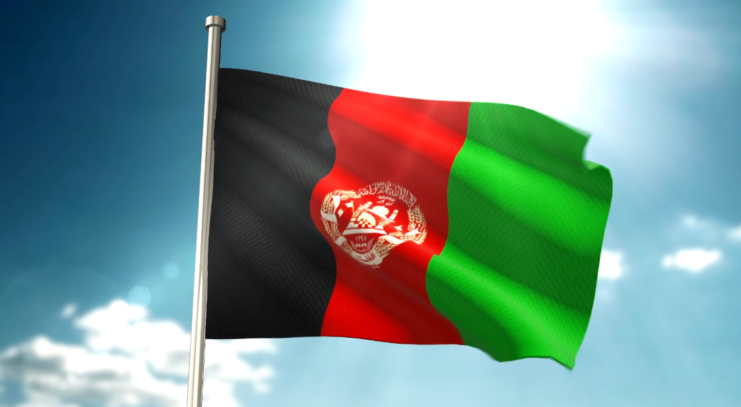
1973 – 1978 Republic of Afghanistan
Daoud Khan abolishes the monarchy and declares himself President. The Republic of Afghanistan is established.
- 1978 – Bloody Communist coup: Daoud Khan is killed
1978 – 1979 Taraki is named President
- June -Afghan guerrilla (Mujahideen) movement is born.
- 1979 -Taraki is killed
1979 – Hafizullah Amin takes the Presidency
- Mass killings of Afghans
- US ambassador killed
- 1979 –Amin is executed
1979 – 1986 Babrak Karmal replaceing Amin
- 1979 Soviet Union (Russia) invade in December.
- Babrak Karmal is replaced by Dr. Najibullah
1986 – 1992 Dr. Najibullah replaceing Karmal
- 1987– Najibullah proposes ceasefire, but the Mujahideen refuse to deal with a “puppet government”.
- 1988–1989 Peace accords signed in Geneva . Soviet Union defeated by Afghanistan, total withdrawal by the Soviets occurred on Feb. 15, 1989.
1992 April 15 The Mujahideen take Kabul and liberate Afghanistan, Najibullah is protected by UN.
- The Mujahideen form an Islamic State–Islamic Jihad Council–elections.
- Interim President Sibghatullah Mojaddedi or Mujaddidi (a religious leader) serving from 28 April to 28 June 1992 and Ahmad Shah Massoud was appointed as interim minister of defense.
- Professor Burhannudin Rabbani takes power.
- Through 1993, Hekmatyar’s Hezb-i-Islami forces, allied with the Shi’a Hezb-i-Wahdat militia, clashed intermittently with Rabbani and Masood’s Jamiat forces. Dostam switched sides, precipitating largescale fighting in Kabul and in northern provinces.
- 1994-The Talibanmilitia are born, and advance rapidly against the Islamic government. Dostum and Hekmatyar continued to clash against Rabbani and Masood’s government, and as a result Kabul is reduced to rubble.
1996 – 2001 Taliban and the United Front
Mullah Omar Taliban militia forced President Rabbani and his government out of Kabul. After the capture of Kabul, the Taliban executed Najibullah.
- The September 11 attacks were a series of four coordinated terrorist attacks by the Islamic terrorist group al-Qaeda against the United States on the morning of Tuesday, September 11, 2001
- Operation Enduring Freedom, the American-led international effort to oust the Taliban regime in Afghanistan and destroy Osama bin Laden’s terrorist network based there, began on October 7, 2001. Within two months, U.S. forces had effectively removed the Taliban from operational power, but the war continued, as U.S. and coalition forces attempted to defeat a Taliban insurgency campaign based in neighboring Pakistan.
- December 5, 2001 The Bonn Agreement (officially the Agreement on Provisional Arrangements in Afghanistan Pending the Re-Establishment of Permanent Government Institutions) was the initial series of agreements passed and intended to re-create the State of Afghanistan.
- Osama bin Laden, the mastermind behind the September 11th attacks, remained at large until May 2, 2011, when he was finally tracked down and killed by U.S. forces at a hideout in Abbottabad, Pakistan.
NATO presence, the Emergency Loya Jirga, the Taliban takeover, and the Panjshir uprising
- Karzai was sworn in as President of the Islamic Republic of Afghanistan on 7 December 2004, at a formal ceremony in Kabul. Many interpreted the ceremony as a symbolically important “new start” for the war-torn nation. Notable guests at the inauguration included the country’s former King, Zahir Shah and three former US presidents.
- After winning a democratic mandate in the 2004 election and removing many of the former Northern Alliance warlords from his cabinet, it was thought that Karzai would pursue a more aggressively reformist path in 2005. However, Karzai proved to be more cautious than was expected.
- On 20 September 2006, Karzai told the United Nations General Assembly that Afghanistan has become the “worst victim” of terrorism. Karzai said terrorism is “rebounding” in his country, with militants infiltrating the borders to wage attacks on civilians. He stated, “This does not have its seeds alone in Afghanistan. Military action in the country will, therefore, not deliver the shared goal of eliminating terrorism.” He demanded assistance from the international community to destroy terrorist sanctuaries inside and outside Afghanistan. “You have to look beyond Afghanistan to the sources of terrorism,” he told the UN General Assembly, and “destroy terrorist sanctuaries beyond” the country, dismantle the elaborate networks in the region that recruit, indoctrinate, train, finance, arm, and deploy terrorists. These activities are also robbing thousands of Afghan children of their right to education, and prevent health workers from doing their jobs in Afghanistan. In addition he promised to eliminate opium-poppy cultivation in the country, which helps fuel the ongoing insurgency. He has repeatedly demanded that NATO and U.S.-led coalition forces take more care when conducting military operations in residential areas to avoid civilian casualties.
- The 24 September 2006, Karzai stated that if the money wasted on War was actually spent on rebuilding Afghanistan, his country would “be in heaven in less than one year”. In May 2007, after as many as 51 Afghan civilians were killed in a bombing, Karzai asserted that his government “can no longer accept” casualties caused by the US and NATO operations.
- 2009 re-election campaign: In the second presidential election, held on 20 August 2009, Karzai was announced to have received just over 50% of the votes. However the election was characterized by lack of security, low voter turnout and widespread ballot stuffing, intimidation, and other electoral fraud. Two months later, under heavy U.S. and ally pressure, Karzai accepted calls for a second round run-off vote, which was announced for 7 November 2009. On 2 November 2009 election officials announced the cancellation of the run-off race and declared Karzai the winner due to the withdrawal of Abdullah Abdullah, Karzai’s run-off opponent, from the process
- President Hamid Karzai refused to sign US-Afghan security pact.
- A security pact with the US, which is critical to Afghanistan’s ability to pay its soldiers and hold off the Taliban, is in limbo, after President Hamid Karzai shrugged off the recommendations of a national council that has approved the deal and said he would continue talks with Washington.
- After a year of negotiations, the Loya Jirga, or grand assembly, of 2,500 delegates approved the agreement to keep US troops in the country after the current combat mission ends in 2014.
- But Karzai stunned US diplomats and many of his own security officials when he told the opening session of the jirga that the bilateral security agreement should not be signed until after presidential elections in April. Washington quickly announced that a deal had to be agreed by the end of the year, but Karzai said that the US had to prove its good intentions by keeping its soldiers out of Afghan homes, ensuring the vote was transparent and promoting peace talks with the Taliban.
- Karzai’s second term as President ended on 29 September 2014. He was succeeded by Ashraf Ghani.
2014 – Sep. 29 Ashraf Ghani After announcing his candidacy for the 2014 elections, Ghani tapped General Abdul Rashid Dostum, a prominent Uzbek politician and former military official in Karzai’s government and Sarwar Danish, an ethnic Hazara, who also served as the Justice Minister in Karzai’s cabinet, as his vice presidential candidates.