
The region called Afghanistan nowadays was noted for its poetic language even before the Islamic conquest of Afghanistan in the 7th through 11th centuries. The Pota (Pata) Khazana, contains Pashto poetry written as far back as the 8th Century.
Some of the famous poets who were born or lived in the region we call Afghanistan nowadays, include Rumi, Khushal Khan Khattak, Rahman Baba, Ahmad Shah Durrani, Timur Shah Durrani, Shuja Shah Durrani, Ghulam Muhammad Tarzi, Ghulam Habib Nawabi, Massoud Nawabi and many others.
The nation also has a number of female poets, such as Rabia Balkhi, 17th-century Nazo Tokhi, and others. Due to political unrest and wars in Afghanistan, many of Afghans that are known for their accomplishments around the world are claimed by others.
Today, there are very few established young Afghan women poets like Afghan American Sajia Alaha Ahrar, a student at the University of Mary Washington in the United States, who wrote a poem in 2010 entitled “Desire for World’s Peace”
Jalal ad-Din Muhammad Balkhi
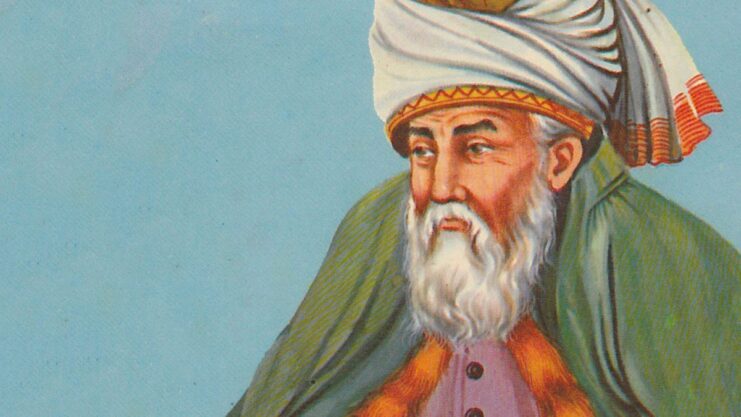
Jalal ad-Din Muhammad Balkhi (Recently his Name was changed to (Rumi)) was born to native Dari-speaking parents (Farsi). His body of work was admired by the Persians and giving them all the credit made his work famous around the world, but to claim him as a Persian is stretching it. By the late 11th century, the majority of Persians had become Muslim, at least nominally. Islam is the religion of 99.4% of Iranians. Nearly 90% of Iranians are Shia and about 10% are Sunni. Rumi was Hanafi which is one of the four religious Sunni Islamic schools of jurisprudence (fiqh).
It is named after the scholar Abu Hanifa an-Numan ibn Thabit (d. 767), a tabii whose legal views were preserved primarily by his two most important disciples, Abu Yusuf and Muhammad al-Shaybani. Islam is the official state religion of Afghanistan, with approximately 99.7% of the Afghan population being Muslim. Roughly 90% practice Sunni Islam, belonging to the Hanafi Islamic law school, while around 10% are believed to be Shias to make it simple.
If Rumi’s last name was Balkhi and he was from Balkh and his Religion was Hanafi Sunni then what is the possibility that he could be Persian? These facts have been published everywhere so it is important to look for ourselves and decide whether he was from Iran or he was from Afghanistan. Looking at the 3 facts I presented to you it is 80% to 99% (so there is no argument) guaranteed that he was from Afghanistan.
Rumi was born on 30 September 1207 in Balkh (Modern-day Balkh Province, Afghanistan). Greater Balkh was at that time a major center of culture and Sufism had developed there for several centuries. He died on 17 December 1273 in Konya in present-day Turkey (then Seljuqids of Rum).
He was laid to rest beside his father, and over his remains, a splendid shrine was erected. The 13th-century Mevlana Mausoleum, with its mosque, dance hall, dervish living quarters, school and tombs of some leaders of the Mevlevi Order, continues to this day to draw pilgrims from all parts of the Muslim and non-Muslim world.
Jalal al-Din who is also known as Rumi was a philosopher and mystic of Islam. His doctrine advocates unlimited tolerance, positive reasoning, goodness, charity and awareness through love. To him and to his disciples all religions are more or less truth.
Looking with the same eye on Muslims, Jews and Christians alike, his peaceful and tolerant teaching has appealed to people of all sects and creeds. A hagiographical account of him is described in Shams ud-Din Ahmad Aflaki’s Manaqib ul-Arifan (written between 1318 and 1353).
To him and to his disciples all religions are more or less truth. Looking with the same eye on Muslims, Jews and Christians alike, his peaceful and tolerant teaching has appealed to people of all sects and creeds.
The profession of the family for several generations was that of Islamic preachers of the liberal Hanafi rite and this family tradition was continued by Rumi.
Rumi’s work has been translated into many of the world’s languages, including Russian, German, Urdu, Turkish, Arabic, Bengali, French, Italian, and Spanish, and is being presented in a growing number of formats, including concerts, workshops, readings, dance performances, and other artistic creations.
The English interpretations of Rumi’s poetry by Coleman Barks have sold more than half a million copies worldwide, and Rumi is one of the most widely read poets in the United States.
By: Mateen Karzai
Ibn Sina
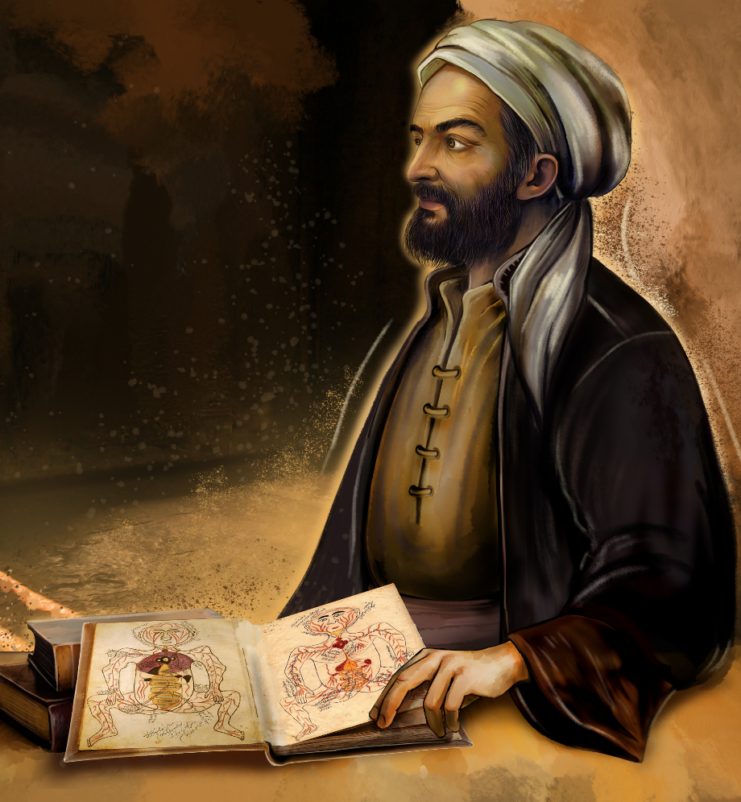
Also popularly known as ‘Avicenna’, Ibn Sina was indeed a true polymath with his contributions ranging from medicine, psychology and pharmacology to geology, physics, astronomy, chemistry and philosophy. He was also a poet, an Islamic scholar and a theologian.
His most important contribution to medical science was his famous book Al Qanun Fi Al-Tibb (The Canon of Medicine). This book is an immense five-volume encyclopedia of medicine containing over a million words. It comprises medical knowledge available from ancient and Muslim sources. His other major work is “The Book of Healing”, a scientific and philosophical encyclopedia.
This great scientist was born in around 980 A.D either in the village of Afshana, near Bukhara, now in Uzbekistan, which is also his mother’s hometown, or he was born where his father Abdullah, was a respected Ismaili scholar from Balkh, an important town of the Samanid Empire, in what is today Balkh Province, Afghanistan. His father worked in the government of Samanid in the village of Kharmasain, a Sunni regional power.
Ibn Sina received his early education in his home town and by the age of ten, he became a Quran Hafiz (he had memorized the Quran). He had exceptional intellectual skills which enabled him to overtake his teachers at the age of fourteen. During the next few years he devoted himself to Muslim jurisprudence, Besides philosophy and medicine, Avicenna’s corpus includes writings on astronomy, alchemy, geography and geology, psychology, Islamic theology, logic, mathematics, physics and works of poetry.
A number of theories have been proposed regarding Avicenna’s madhab (school of thought within Islamic jurisprudence). Medieval historian Zahir al-din al-Bayhaqi (d. 1169) considered Avicenna to be a follower of the Brethren of Purity. On the other hand, Dimitri Gutas along with Aisha Khan and Jules J. Janssens demonstrated that Avicenna was a Sunni Hanafi.
However, the 14th-century Shia faqih Nurullah Shushtari according to Seyyed Hossein Nasr, maintained that he was most likely a Twelver Shia. Conversely, Sharaf Khorasani, citing a rejection of an invitation of the Sunni Governor Sultan Mahmoud Ghazanavi by Avicenna to his court, believes that Avicenna was an Ismaili. Similar disagreements exist on the background of Avicenna’s family, whereas some writers considered them Sunni, and some more recent writers contested that they were Shia.
According to his autobiography, Avicenna had memorized the entire Quran by the age of 10. He learned Indian arithmetic from an Indian greengrocer, Mahmoud Massahi and he began to learn more from a wandering scholar who gained a livelihood by curing the sick and teaching the young.
He also studied Fiqh (Islamic jurisprudence) under the Sunni Hanafi scholar Ismail al-Zahid. Avicenna was taught to some extent of philosophy books such as Introduction (Isagoge)’s Porphyry (philosopher), Euclid’s Elements, and Ptolemy’s Almagest by an unpopular philosopher, Abu Abdullah Nateli, who claimed to philosophize.
Ibn Sina was an extremely religious man. When he was still young, Ibn Sina was highly baffled by the work of Aristotle on metaphysics so much so that he would pray to God to guide him. Finally, after reading a manual by the famous philosopher al-Farabi, he found the solutions to his difficulties.
Contributions and Achievements
At the age of sixteen, he dedicated all his efforts to learning medicine and by the time he was eighteen gained the status of a reputed physician. During this time he cured Nuh II, Ruler of the Samanids, of an illness in which all the renowned physicians had given up hope. On this great effort, the Amir wished to reward him, and the young physician requested consent to use his exclusively stocked royal library.
On his father’s death, when Ibn Sina was twenty-two years old, he moved to Jurjan near the Caspian Sea where he lectured on logic and astronomy. Here he also met his famous contemporary Abu Rayhan al-Biruni. Later he traveled to Rey and then to Hamadan (both in present-day Iran), where he wrote and taught his works. Here he also cured Shams al-Dawla, the Emir of Hamadan, from a severe illness.
From Hamadan, he moved to Isfahan (now in central Iran), where he finished his epic writings. Nevertheless, he continued to travel and too much mental exertion as well as political chaos affected his health. The last decade or so of his life, he spent in the service of military commander Ala al-Dawla Muhammad. He served him as a physician and general literary and scientific consultant, including during his campaigns. He died in June 1037 A.D, aged 58 and was buried in Hamedan, Iran.
Works
Avicenna’s most important contribution to medical science was his famous book Al Qanun Fi Al-Tibb (The Canon of Medicine), known as the “Canon” in the West. This book was an immense five-volume encyclopedia of medicine including over a million words. It comprised of medical knowledge available from ancient and Muslim sources. This book was translated into Latin in the twelfth century and was used as the standard medical text in European universities until the mid-seventeenth century.
His other major work was “The Book of Healing”, a scientific and philosophical encyclopedia. This book was intended to ‘heal’ the soul. It was split into four parts: logic, natural sciences, mathematics and metaphysics. In his book, he developed his own system of logic, Avicennian logic. In astronomy, he proposed that Venus was closer to the Sun than the Earth.
He invented an instrument for observing the coordinates of a star. He made several astronomical observations and stated that the stars were self-luminous. In mathematics, Avicenna explained the arithmetical concept and application of the “casting out of nines”. Ibn Sina also contributed to poetry, religion and music. In total, Avicenna wrote over 400 works, of which around 240 have survived.
Abdul Bari Jahani
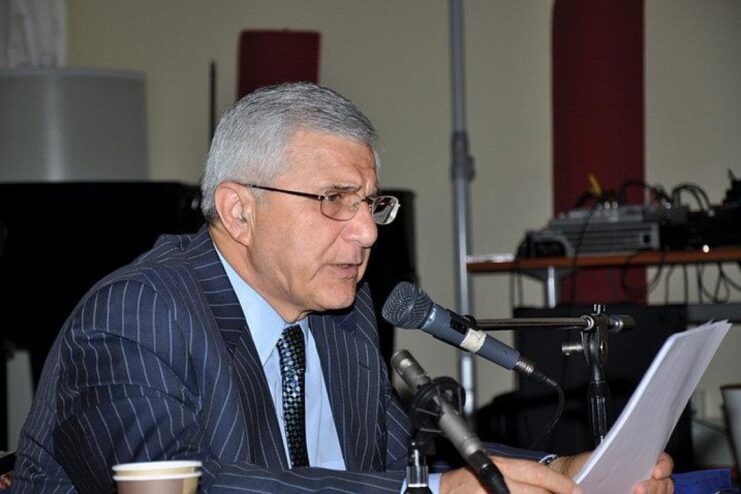
Abdul Bari Jahani is considered to be one of the most famous contemporary poets of Pashto language. He was born in Kandahar, southern Afghanistan, in 1948 and got his BA degree from Kabul University’s Faculty of Literature in 1972. In April 2015, he became the minister of Information and Culture of Afghanistan.
Prior to that, he worked for the Voice of America’s Pashto service in Washington DC as a producer/presenter from 1983 until his retirement in 2010. Jahani has published around twenty books; mostly consisting of his poetry but a few are on history and Pashto folk literature.
He also wrote the current national anthem of Afghanistan which was approved in 2006. The following poem (Pride) is from one of his poetry collections, called ‘Da Sabawoon Pa tama’ (Hoping for Dawn), which was published in 1999.
His poetry translation:
Pride
How sweet the tales of battlefields.
How easy the cries of praise and bravo.
How pleasing to talk of fearless men
and share legends of their heroic lives.
How soothing the old songs are to the ear
and the names of the lion hearts sung by maidens.
How proudly pretty girls, like bunches of flowers,
flock eagerly to the shrines of martyrs.
But has anyone asked the martyr about his wounds?
Has anyone talked to the hero about his suffering?
Has anyone looked in his eyes on the threshold of death and read their tale of thwarted hopes?
Has anyone seen the broken heart of the martyr’s mother?
Has anyone witnessed the ruined life of the young widow?
Has anyone stumbled on the rubble of a thousand dreams?
Has the poet who writes of chains and shackles
felt the chill of a dungeon at night?
Has he been thrown into a scorpion pit
to be stung to the bone again and again?
I can never forget what the wise man says:
‘The fires burns the land on which it ignites’.
Abdul Hai Habibi
Abdul Hai Habibi an academic, Habibi worked diligently throughout his life. He was ahead of his time for the world to understand him. He is the author of 115 books and over 500 papers and articles on the literature, history, philosophy, linguistics, poetics and culture of the people of Afghanistan. Several of his books have been translated to English, Arabic, German and other foreign languages.
Habibi was born in Kandahar city of Afghanistan in 1910, in a Pashtun family of scholars of Kakar tribe, died on 9 May 1984, in Kabul, during the Soviet war in Afghanistan. He was 74 years old at the time of his death. He was fluent in Pashto and Dari.
The ancient art of storytelling continues to flourish in Afghanistan, partly in response to widespread illiteracy. This age-old practice of telling folktales, through music and the spoken word, is a highly developed and much-appreciated art form.
The use of folklore has become the thread that links the past with the present in Afghan society. Folktales concern all parts of Afghan life and often teach traditional values, beliefs, and behaviors. They are also a major form of entertainment in Afghanistan.
Literature in both the Dari and Pashto languages originated in the early Muslim centuries when Arabic was also used. Shah nameh (Book of Kings), the great epic poem completed in 1010 by the Persian poet Firdawsi, consists of 60,000 rhyming couplets in Dari. Many other poems and tales were written in Dari and Turkic languages as well.
Khushhal Kattak, a famous 17th-century Pashtun warrior and poet, used verse to express the tribal code. Modern writings have attempted to bring Afghans closer to understanding the changes associated with the modern world, and especially to comprehending the destruction of their country by war.
In 1972 Sayyed Burhanuddin Majruh wrote several volumes in classical, rhythmic Dari prose about a traveler who joins his countrymen in exile, where they exchange ideas and narratives from ancient times in the light of modern concepts of reason, logic, science, and psychoanalysis.
During the war with the Soviets, writings focused on the twin concerns of Islam and freedom. Resistance to the Soviets was especially pronounced in the Pashto province of Paktia; in 1983 Gulzarak Zadran published “Afghanistan the Land of Jihad: Paktiain Uprising Waves” in the Pashto language.
The Afghanistan Historical Society and the Pashto Academy published literary magazines and encouraged new writers in recent years, although much of their effort has been stopped by the most recent warfare.
Pata Khazana – a response to its attackers!

Lately, a lot has been heard about the anthology of Pashto poetry – Pata Khanaza. These critical voices regarding its authenticity have come from a very less likely source than expected. In this context, one would think that these concerns have been presented by individuals with at least some sort of education in Pashto literature and history. However this has not been the case here. It becomes even more conspicuous since all of these individuals have appeared under a pseudonym.
The mystery becomes even more intriguing when no evidence for supporting their baseless claims is offered. Everything comes directly from their guts and preconceived notions about Pashtuns and the Pashto language and poetry.
Without any academic education in Pashto language, literature, history and anthropology these “mysterious individuals” have given themselves the right to attack this anthology of Pashto poetry savagely. These attacks have not stopped there. They have delivered personal insults to the author of Pata Khazana – Professor Habibi, a prominent and highly respected Pashto author, linguist and historian.
This issue has been turned into a racist and fascistic instrument for embarrassment and insulting of Pashtuns. These are just a couple of examples done in the name of literary critique. However, these individuals left the academic arena for literary studies long ago and instead joined forces in Nazi-style cruelty against a certain ethnic group and their history. This is not a civil way of doing business.
In the light of above, let’s seriously scrutinize the skepticism regarding the authenticity of Pata Khazana and settle the matter once for all. It will save a tremendous amount of time for all of us and we could focus on other important issues which concern our war-torn country. Quarreling on such a low level is only time-consuming. Let’s give it some academic and humanistic value.
The first question which has always been raised is the matter of evidence. And without providing any sort of proof these individuals have totally dismissed Pata Khazana as a “creation” or “fabrication” of Poland Abdul Hai Habibi. At the same time, they claim that no other academician of any repute is willing to testify to its authenticity. They get even bolder and suggest that it has never existed. Mark carefully that these allegations have been made without any factual backup.
In order to conduct academic research, write, defend or reject an academic thesis it is required to possess extensive knowledge of the subject, some intelligence, common sense and a critical mind. Furthermore, an enormous amount of research material and sources are needed.
And these individuals should have these qualities and access to academic reliable sources in order to maintain some scholarly level in these discussions. I think these simple and basic principles have been gravely and savagely violated in a quest for racial and linguistic superiority.
It is absolutely essential that we do not forget our integrity, morals and ethics while dealing with delicate issues concerning Afghanistan and its people. Attacking and blaming a certain ethnic group is an everyday activity among contemporary populist politicians whose main agendas are exploiting racial issues and tensions. These misdeeds are committed in the name of freedom of speech on daily basis. Those people have a hidden program and agenda which does not serve our country’s best interest. It might give them some temporarily pleasure and popularity but our brave nation will never prosper.
In this article, I will show that they are wrong about Pata Khazana and at the same time they have turned a blind eye to the overwhelming amount of evidence and proof which corroborates that Pata Khazana is an authentic anthology and encyclopedia of Pashto poets.
These allegations and accusations regarding “fabrication” and “falsification” are easily disputed and dismissed as pure baseless nonsense. I hope that in the future – before rejecting and repudiating this historical book – my findings will serve as an academic complement.
About Pata Khazana
Pata Khazana which means Hidden Treasure is an anthology and encyclopedia of Pashto poets from 7th century A.D. to 18th century A.D. This important historical book was gathered and written by Muhammad Hotak during the renaissance of the Pashto language in Kandahar in 1728-29 AD in Afghanistan.
Many ancient and important and precious pieces of Pashto literature and poetry have been saved and cataloged by this ambitious and young author. The earliest poet mentioned in Pata Khazana is Amir Krorr, who died in 771 AD and the list continues chronologically till Muhammad Hotak’s contemporary poets.
Professor Abdul Hai Habibi edited and published Pata Khazana in 1944 from an older handwritten manuscript.
Scholars and academicians about Pata Khaza
1. Alessandro Bausani
Alessandro Bausani (1921-1988) was Professor Emeritus and Director of the School of Oriental Studies and the Institute of Islamic Studies at the University of Rome “La Sapienza”, and he was a member of the “Lincei” National Academy. He was well-known in academic and cultural circles for his unceasing search for knowledge, expressed through his publications, essays and articles.
Pata Khazana has been cited extensively by Professor Bausani, in his Le letterature del Pakistan et dell ‘Afghanistan, in the section, la lingua e la letteratura Pashto. This book was published in 1968. Studying Professor Bausani’s work and reading about his character one realizes that he was a man of great integrity, knowledge and wisdom, who spent most of his life researching. If there was a doubt about the authenticity of Pata Khazana he would have not cited it that extensively in his book.
2. Georg Morgenstierne
Georg Morgenstierne (1892 – 1978) was a professor of Indo-Iranian languages at the University of Oslo, Norway (UiO). The National Library of Norway, Oslo department and the Institute of East-European and Oriental languages at the UiO contain source materials originating from Morgenstierne’s study tours to Afghanistan, Pakistan, India and Iran.
Morgenstierne and Bausani – two prominent scholars who always thoroughly and carefully examined their sources – have already discussed Pata Khazana with each other. The account of one of these discussions has been documented in Bausani’s Le letterature del Pakistan et dell ‘Afghanistan.
Bausani cites a letter written to him by George Morgenstierne. Bausani writes, “We can concur with the opinion of the eminent Norwegian linguist who writes that one can believe ‘in the authenticity of Pata Khazana as the work of Muhammad Hotak, during the national renaissance of Kandahar in the first half of the XVIII century, when it was important to lay claim to the antiquity of Pashto poetry in relation to Persian poetry.
There is no reason to doubt that he was able to save many precious fragments of ancient poems. How ancient, I think it is impossible to say, but I think that we possess in the Pata Khazana the most ancient Pashto texts in existence.’
Morgenstierne’s statement regarding the authenticity of Pata Kahzana is based on his extensive research and knowledge of our country and Pashto language. He is still considered one of the greatest authorities in linguistics of Afghanistan, Pakistan, Iran and India. His work provides a huge treasure of knowledge and an enormous research archive in Norway.
Pata Khazana in 2003
On November 22, 2003, an article on Pata Khazana by Magda Katona appeared in Magyar Nemzet Magazin of Budapest in Hungary. The author states that a manuscript of Pata Khazana is preserved in the Armin Vambery Collection of the Library of the Hungarian Academy of Sciences. It was obtained by Armin Vambery in 1859 A.D. from Yakub Khan of Herat.
Armin Vambery – a Hungarian Orientalist and traveler – was born in 1832. After their initial education, he acquired some twenty Oriental languages and dialects. He visited Teheran, and Mecca, and spent several months with dervishes in rough and squalid travel through the deserts of Asia. He succeeded in maintaining his disguise, and on arriving at Khiva went safely through two audiences of the Khan.
Passing Bokhara, they reached Samarkand, where the Emir, whose suspicions were aroused, kept him in the audience for a full half-hour; but he stood the test so well that the Emir was not only pleased with “Reshid Effendi” (Vambery’s assumed name), but gave him handsome presents.
He then reluctantly turned back by way of Herat, where he took leave of the dervishes. In Heart, he met Yakub Khan, who gave me a manuscript of Pata Khazana. After that Armin Vambery returned with a caravan to Teheran, and subsequently, in March 1864, through Trebizond and Erzerum to Constantinople.
Conclusion

Two prominent academicians – Alessandro Bausani and George Morgenstierne – have used Pata Khazana in their academic work and have even expressed their expert views regarding its authenticity and antiquity. These two outstanding Orientalists are renowned for their extensive work on Afghanistan, Pakistan, India and Iran. Just Afghanistan is not their area of interest and neither is Pashto.
The most important fact is that they do not have any connection to Pashtuns whatsoever. They have expressed their opinion regarding Pata Khazana in pure scholarly and academic way. Even if a word of the claims – made by some ethnofascists and Pashtun haters – was true then so many prominent and respected scholars would have not gambled their reputation on this “fabricated” anthology.
The question of authenticity is answered by Morgenstierne and Bausani. Now remains the issue of its existence. Apart from the manuscript that has been presented by Professor Habibi, there is now another and much older copy in Hungary.
This manuscript predates even Professor Habibi’s birth. I am aware of the fact these fascists would claim that why this copy of the manuscript was not found earlier. The reason for that is nobody had actually looked for it in the archive.
Armin Vambery gathered thousands and thousands of books on his trips and adventures in Asia and the Middle East which are kept in the distinguished Library of the Hungarian Academy of Sciences. When this manuscript was discovered and recognized articles were written about the fascinating journey it had made from Heart Afghanistan to the Library of the Hungarian Academy of Sciences. Currently, many Pashto researchers are looking into this manuscript and I have not taken those results here for the reasons that are explained in the following.
Abdul Karim Baryalai – a prominent Pashto researcher – whose extensive research results have been collected and published into a book called “Pata Khazana de Haqiqat pa Ayena kshe” (Pata Khazana in the mirror of research) in the year 2003.
Despite the existence of this credible and powerful source I deliberately chose three non-Afghan and non-Pashtun references in order to avoid the question of neutrality and credibility in this article. The results of Mr. Baryalai’s research have not been presented in this article.
After examining the evidence from reliable sources and material it leaves no room for doubt about the authenticity of Pata Khazana. The whole campaign against this historical book is a product of these ethnofascists’ fantasy and has no value in academic circles.
Questions to these attackers
1. When you question the authenticity of Pata Khazan, what are your academic credentials? Are you a linguist? Do you have a PhD in Pashto literature history in order to be able to give your opinion in this matter?
2. How can you question someone’s work who had dedicated his whole life to Pashto and knows everything about this language? You don’t even know the word Pashto so how can you be right and Professor Habibi be wrong?
3. Are there any academicians of the same level as Bausani and Morgenstierne who would corroborate your version of the matter?
4. A manuscript of Pata Khazana is preserved in the Armin Vambery Collection of the Library of the Hungarian Academy of Sciences. That copy was given to Armin Vambery in 1859 A.D. long before even Professor Abdul Hai Habibi was even born. How can you prove your claim that Pata Khazan was the brainchild of Professor Habibi when in fact a copy from 1859 A.D. exist in Hungry?
5. What drives you so fiercely to show that Pata Khazana is not authentic? Is it racism? Inferiority complex? Pure hatred? A maniac fixation? What is it?